
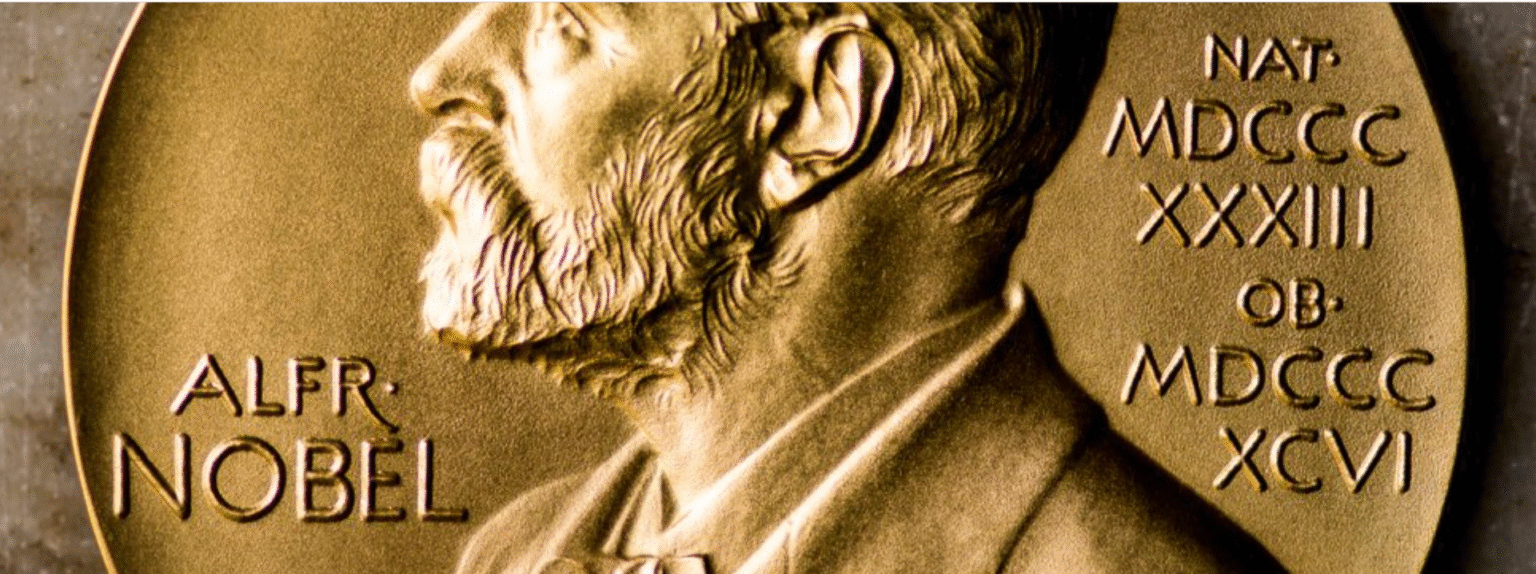
In 2019, the Nobel Prize in Physiology or Medicine was awarded to three outstanding scientists: Peter J. Ratcliffe (University of Oxford), William G. Kaelin Jr. (Harvard University) and Gregg L. Semenza (Johns Hopkins University). Their discoveries revealed how cells sense changes in oxygen availability and how they adapt to hypoxic conditions — i.e. oxygen deficiency.
The laureates identified the molecular mechanism that regulates gene activity in response to the oxygen level in the environment. The key element of this process turned out to be the transcription factor HIF-1α (Hypoxia-Inducible Factor 1-alpha), which under hypoxic conditions activates the expression of genes responsible, among others, for angiogenesis, erythropoiesis, glucose metabolism and mitochondrial adaptation.
Scientific significance
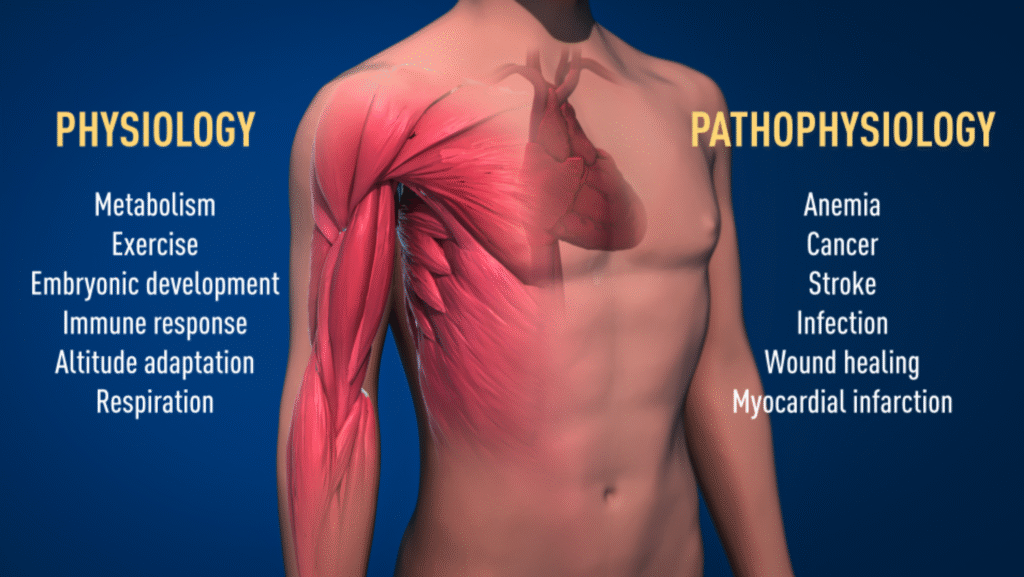
The mechanism by which cells sense oxygen not only explains basic physiological processes — such as the formation of blood vessels or the production of red blood cells — but also opens new therapeutic pathways in the treatment of diseases in which hypoxia plays a key role:
- Oncology: tumours develop in a hypoxic environment, which promotes angiogenesis and resistance to treatment.
- Cardiology: myocardial ischaemia requires the stimulation of angiogenesis — a HIF-dependent process.
- Pulmonology: COPD and asthma are associated with chronic hypoxia and adaptive disorders.
- Sports medicine and rehabilitation: hypoxic training uses physiological responses to oxygen deficiency to improve performance and recovery.
Clinical applications of the HIF pathway
Intensive research is currently focused on drugs that modulate HIF activity — both as stimulators (e.g. in the treatment of anaemia) and inhibitors (e.g. in cancer therapy). Examples include oral HIF stabilisers used to treat anaemia in patients with chronic kidney disease.
Expert commentary
“The beauty of this Nobel Prize is that it concerns basic science with a direct translation into clinical practice. As a cardiologist, I pay attention to angiogenesis — key in cardiac ischaemia. But for an oncologist, it is a process that must be inhibited, because it promotes tumour growth.”
— Prof. Krzysztof J. Filipiak, MD, PhD, Medical University of Warsaw
“This discovery changed our understanding of how cells respond to environmental stress. The HIF pathway is not only oxygen biology — it is a gateway to cancer therapies, heart disease treatment and even training strategies.”
— Dr Olga Dupuy, neurophysiologist, Université Côte d’Azur
“The HIF mechanism is one of the most important signalling pathways in human biology. Its regulation is the future of personalised therapy.”
— Prof. Gregg L. Semenza, Nobel laureate

References
- Kaelin W.G. Jr., Ratcliffe P.J., Semenza G.L. (2019). Nobel Prize in Physiology or Medicine 2019. https://www.nobelprize.org/prizes/medicine/2019/summary/
- Semenza G.L. (2012). Hypoxia-inducible factors in physiology and medicine. Cell 148(3): 399–408. DOI: 10.1016/j.cell.2012.01.021
- Ratcliffe P.J. (2007). Oxygen sensing and hypoxia signalling pathways in animals: the implications of physiology for cancer and other diseases. Annals of the New York Academy of Sciences 1177: 5–14. DOI: 10.1111/j.1749-6632.2009.05007.x
- Kaelin W.G. Jr. (2005). Proline hydroxylation and gene expression. Annual Review of Biochemistry 74: 115–128. DOI: 10.1146/annurev.biochem.74.082803.133142
Related links
